
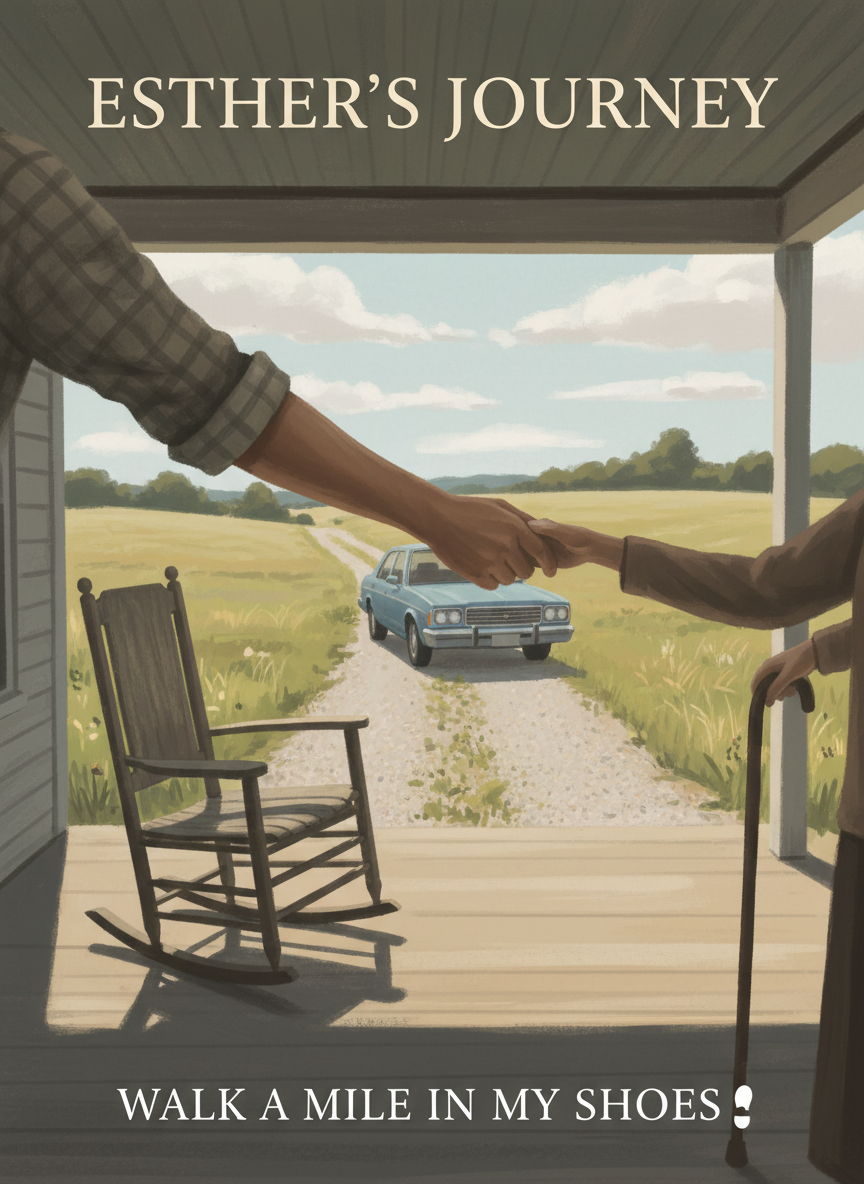
 The “mountains” that once separated Esther from her community began to shrink the day a brochure from the local Human Services Agency arrived in her mailbox. It detailed a Volunteer Driver Program, a service specifically designed for rural residents who, like Esther, found themselves stranded by distance and the limitations of age. The County Human Services Agency sends volunteer drivers to her small community every Wednesday, giving Esther a reliable, predictable anchor for her week.
The view from the farmhouse window now carries a sense of possibility rather than isolation.
When Esther made the call, the anxiety she usually felt about “being a burden” was met with warmth and professionalism. The agency explained that they would pair her with a local volunteer who could provide door-to-door transportation. This service was available every Wednesday in her community. To her surprise and immense relief, the volunteer driver on the schedule for her was a familiar one: Robert.
“Robert? Why, he worked with my late husband, Charles for fifteen years down at the mill,” Esther recalled, her voice brightening. “He was always the one Charles praised for being the most reliable man on the floor. Knowing it’s him… it makes all the difference.”
Knowing that Wednesdays are her designated travel days, Esther now schedules all of her appointments and trips on that single day. Her hairdresser and doctor have both agreed to make that day available for her, so everything can be coordinated in one efficient outing.
Trust Behind the Wheel
The first time Robert pulled into the gravel driveway, the transition felt seamless. He didn’t just wait in the car; he walked up to the porch, tipped his cap, and offered a steady arm to help Esther navigate the steps. Robert is exactly as she remembered – kind, polite, and exceptionally safe behind the wheel.
During the drive to the county seat, they don’t just sit in silence. They talk about Charles, about the changes in the town, and about Robert’s own family. The trip that used to be a “marathon” of exhausting bus transfers has been transformed into a pleasant visit with an old friend. Esther no longer feels like a passenger in a cold machine; she feels like a member of a community that cares.
Sustainability and Dignity
One of the most important aspects for Esther is the contribution model of the program. The Human Services Agency operates on a “contribute what you can” basis. This allows Esther to maintain her dignity and independence, giving a small, manageable amount from her Social Security check to the organization.
She also finds peace of mind knowing that Robert is reimbursed for the miles he drives. “I know gas isn’t cheap,” she says. “Knowing the agency offsets his costs makes me feel much better about accepting the help. It’s a beautiful circle – he gives his time, the agency supports the logistics, and I give what I’m able.”
Closing the Gap
The impact on Esther’s life has been profound. She no longer misses events at the senior center – she can count on being there every Wednesday, where Martha and Eleanor are always glad to see her arrive on her own terms. Grocery day has taken on a welcome bonus as well; the local family-owned grocery store has changed their “senior shopping day” from Fridays to Wednesdays. Esther takes advantage of the store’s senior discount day and saves 10% on her purchases – a meaningful difference on a fixed Social Security income. Her prescription refills are picked up without a whole day being “lost,” and her knees are spared the mile-long trek to the bus stop.
As the sun sets over the upstate New York fields, Esther sits in her favorite armchair, the one where Charles’s presence always lingers. But the “gilded cage” has been opened.
“I’m still here, Charles,” she whispers, a genuine smile finally resting on her face. “I’m still in our home, but the world doesn’t feel so far away anymore. The bridge has been built.”
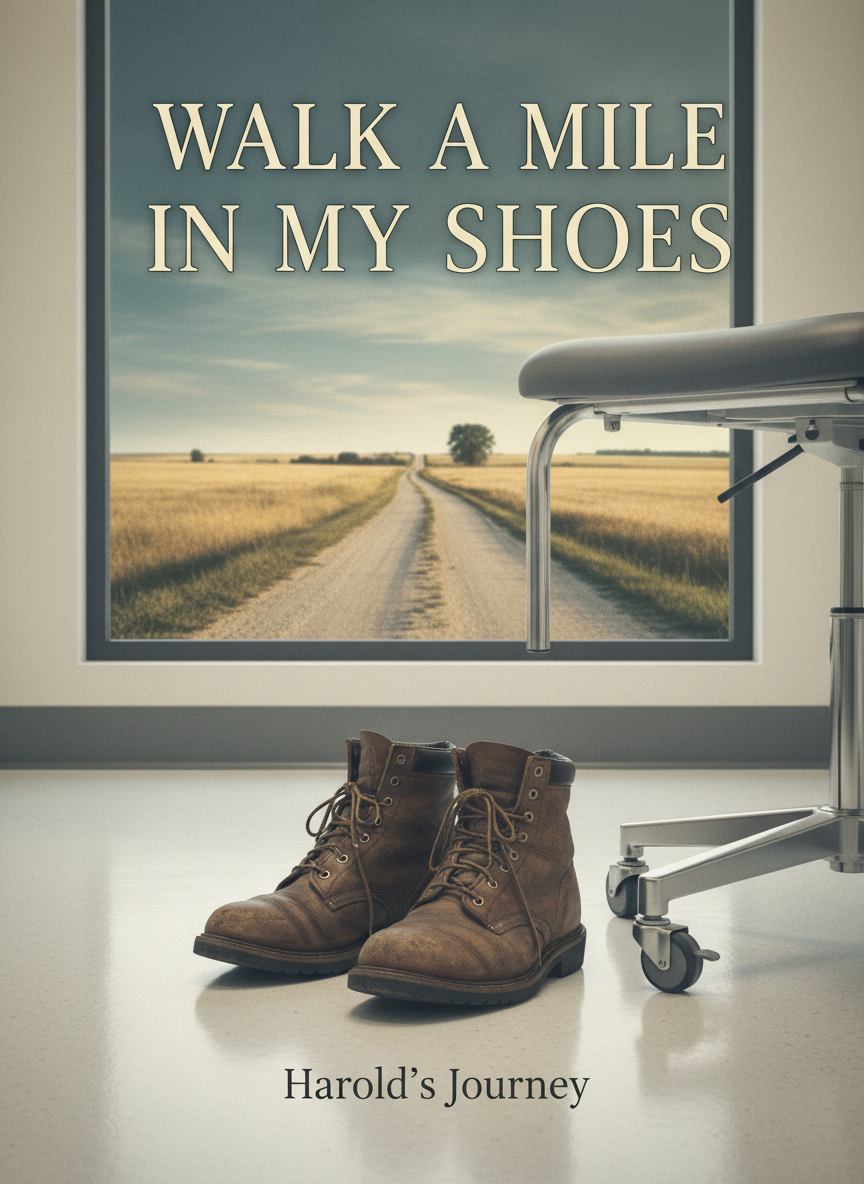
For Harold, a pair of worn brown work boots sits by the door, a reminder of a lifetime of hard work on rural roads. But these days, those boots don’t travel as far as they used to…at least not on their own. Three times a week, Harold’s life depends on a complex choreography of scheduling, community transport, and physical endurance.
Dialysis isn’t just a medical appointment; it’s a life sustaining anchor that demands absolute punctuality. Yet, for those living in an area where “Community Transportation” is unpredictable, the “Long Road to the Chair” is paved with more than just asphalt and gravel. It is paved with the anxiety of a missed pickup, the physical exhaustion of post treatment, and the heavy weight of what we call the “Guilt of the Unpredictable.”
In part two of Walk a Mile in My Shoes, we invite you to step into Harold’s boots and look past the statistics of rural transit and into the reality of a man struggling to bridge the gap between his home and the care he needs to survive.
In the quiet, rolling landscapes of the rural Midwest, 63-year-old Harold used to find peace. A retired mechanic who spent four decades under the hoods of tractors and trucks, Harold was always the one people called when they were stuck. But today, Harold is the one who is stuck – not in the mud of a cornfield, but in a healthcare gap that is slowly narrowing his world.
Harold is a dialysis patient. Three times a week, every week, his life depends on a machine that filters his blood, doing the work his kidneys can no longer manage. It is a grueling, non-negotiable rhythm that dictates every hour of his existence. Yet, in his small town, the 45-mile journey to the nearest dialysis center has become a barrier more formidable than the disease itself.
The Post-Treatment Fog
While Harold is still capable of driving his old pickup to the clinic in the mornings, the return trip is a different story. Dialysis is often described as “running a marathon while sitting still.” By the time the four-hour session – his “chair time” – is over, Harold is physically and mentally depleted. The “dialysis hangover” leaves him with crashing blood pressure, cramping muscles, and a profound exhaustion that makes navigating rural highways an impossibility.
“I feel like I’ve been run over by the very trucks I used to fix,” Harold says. “My hands shake; my head spins. I know I’m not safe behind the wheel after treatment. But when you live out here, there isn’t a bus on every corner.”
The Guilt of the Unpredictable
Harold has friends – good people who have lived alongside him for years. They’ve offered to help, and for a while, they did. But Harold has stopped asking. The reason is a clinical reality called “unpredictable chair time.”
A dialysis session doesn’t always end when the clock says it should. If Harold’s blood pressure drops too low, the nurses must slow the process. If his access site – the “lifeline” in his arm – doesn’t stop bleeding immediately, he has to stay longer. Harold hates the thought of his neighbor, Bill, sitting in a waiting room for three hours, only for that wait to turn into five. The guilt of “imposing” on others’ lives has led Harold to stop calling, choosing instead to struggle alone.
A System That Fails the Most Vulnerable
For the past four months, Harold has attempted to rely on local Non-Emergency Medical Transportation (NEMT). The results have been disheartening. The providers are often stretched thin, arriving an hour late or, in some cases, not arriving at all.
“Waiting on a cold curb after treatment when you’re already feeling faint… it takes something out of you that you don’t get back.”
More concerning is the lack of specialized care. Many NEMT drivers are often just drivers – not medical professionals. Post-dialysis patients are at high risk for “re-bleeding” from their access sites. If Harold were to start bleeding in the back of a transport van, his driver might not have the training to intervene. This safety risk, combined with the unreliability of the service, has caused Harold to miss several treatments over the last few months. Every missed appointment allows toxins to build up in his system, further deteriorating his heart and lungs.
The High Stakes: A Race for a Kidney
The most heartbreaking consequence of these transportation hurdles isn’t just the daily fatigue; it’s the threat to Harold’s future. He is currently on the transplant list, waiting for the call that a donor kidney has been found. But transplant eligibility is strictly monitored.
To stay on the list, a patient must prove they are “compliant” with their treatment and that their health is stable enough to survive the surgery. Because Harold has missed appointments due to transportation failures, his laboratory results are slipping. He fears that when the call finally comes, he’ll be told he’s no longer eligible – not because he gave up, but because he simply couldn’t get to the chair.
An Innovative Path Forward: The Coordinated Rural Solution
Harold’s story is a call to action for a smarter, more integrated approach to rural healthcare. We are proposing an innovative, three-pronged solution to bridge the gap for patients like Harold:
- The Communication Bridge: A real-time coordination system between the dialysis center and transportation providers. Instead of a fixed pickup time, the clinic uses a secure app to “signal” the transit system 30 minutes before Harold is ready to leave, eliminating the “waiting game.”
- The Rural Demand-Response Transit: Moving away from rigid NEMT models to a flexible, demand-response system that prioritizes medical routes. These drivers are not just transit staff; they are part of a specialized “health fleet.”
- The Community Health Worker (CHW): A dedicated CHW acts as the navigator. This individual ensures Harold’s transportation is scheduled, checks in on him post-treatment, and is trained in basic dialysis emergency protocols (like managing a bleed) to ensure a safe journey home.
By treating transportation as a vital clinical component rather than an afterthought, we can ensure that a patient’s zip code – and their “chair time” – never stands in the way of their second chance at life.
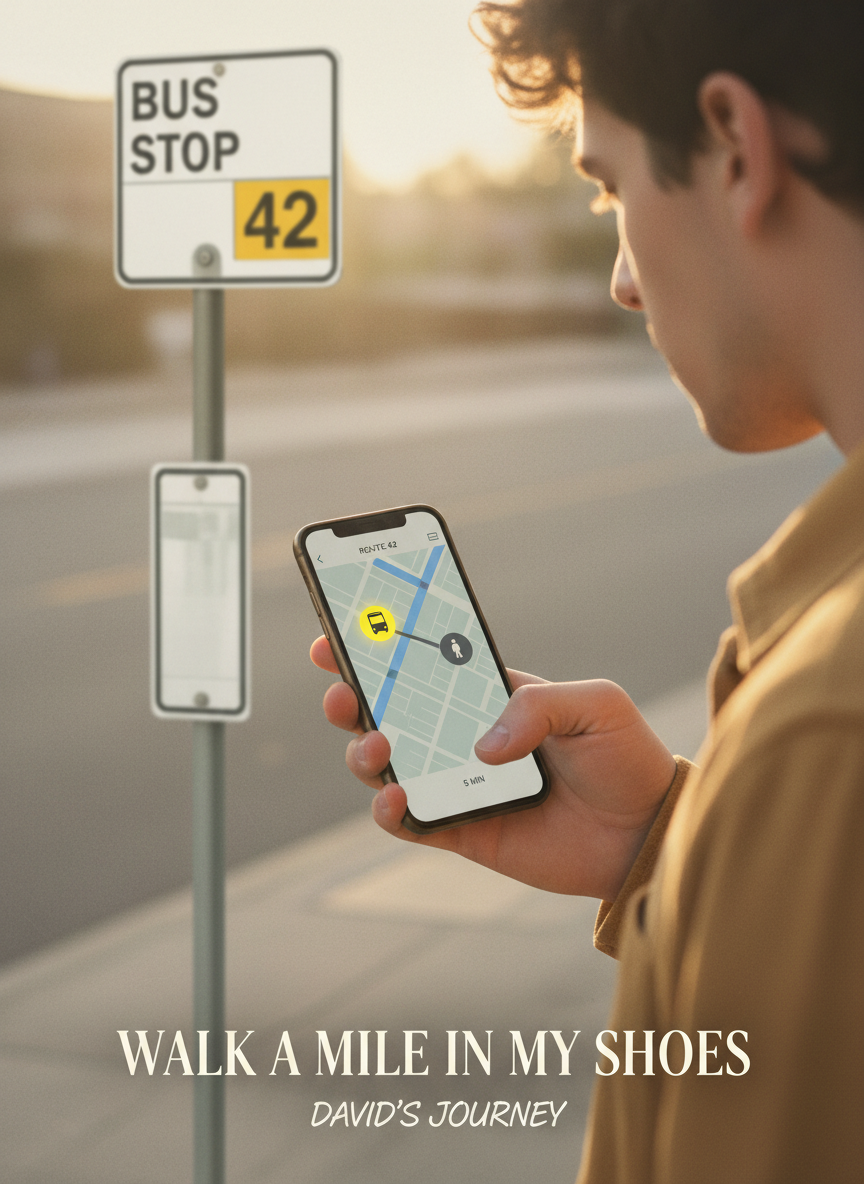
In the previous journey, we shared Harold’s struggle with getting to dialysis. As we continue to look at the human faces of mobility and step away from the abstract urban planning and transit budgets, we will Walk a Mile in David’s shoes, in a small bustling city in Tennessee.
David is 32 years old, has Downs Syndrome, and lives in a supportive group home. He has a smile that fills the room and a work ethic that is finally about to be put to the test. He has landed a job interview at a warehouse in an industrial park just three miles outside of town. But as David discovered, three miles can feel like an ocean when you don’t have a way to cross it.
The Threshold of a Dream
When I sat down with David in the common room of his group home, his excitement was palpable. He was wearing a neatly pressed button-down shirt – the one he plans to wear to his interview.
“I want to work.” David told me, his voice firm with pride. “I’ve never had a real paycheck before. With my own money, I could buy my own video games. I could take my friends out for pizza. I want to be like everyone else. I want to go to work in the morning and come home tired.”
For David, the job at the warehouse isn’t just about moving boxes; it’s about the dignity of labor. It’s about the transition from being someone who is “cared for” to someone who “contributes.” However, as we kept talking, David’s hands began to fidget with the hem of his shirt. The excitement was being crowded out by a growing shadow of anxiety.
The “What Ifs” of the Three-Mile Gap
The industrial park is only three miles away. To a person with a car, it’s a five-minute drive. To an avid cyclist, it’s a fifteen-minute ride. But for David, who does not drive, the distance represents a complex puzzle of schedules, stops, and uncertainties.
“Andrea – she’s my job coach – she’s taking me to the interview,” David explained. “But she said she can’t drive me every day. She has other people she has to help. She told me I have to take the bus.”
David has lived in this city for years, but he has never ridden the city bus alone. To him, the bus is a giant, roaring mystery. He began to list the questions that had been keeping him up at night:
- “How will I know where to get on? What if I stand at the wrong sign?”
- “What if the bus doesn’t get me to work on time? If I’m late, will they fire me on my first day?”
- “What if I miss the bus coming home? Will I be stuck at the warehouse in the dark?”
- “Does the bus stop right at the door, or do I have to walk in the grass?”
The weight of these questions was so heavy that David sighed, looking down at his shoes. “Maybe I shouldn’t get the job,” he whispered. “Maybe I should just stay here. It’s safer.”
Enter the Mobility Manager
This is the point where many stories like David’s end—with a willing individual staying home because the “last mile” of transportation is an insurmountable wall. But David’s job coach, Andrea, had a plan.
Andrea told David she was calling an agency that receives Federal Funding specifically designed to assist people with disabilities in overcoming these exact hurdles. She mentioned a “Mobility Manager” and something called “Travel Training.”
David laughed a little when he recounted this part. “I told Andrea, ‘I don’t want to travel! I don’t want to go to Florida or on a plane. I just want to go to work!’”
He eventually learned that travel training isn’t about vacations. A Mobility Manager is like a navigator for the local transit system. They don’t just give you a map and a prayer; they come to your house. They walk with you to the bus stop. They ride the bus with you – over and over again – until you know every turn, every stop, and exactly how to pull the cord to signal your exit.
A New Sense of Hope
The existence of this program changed everything for David. Knowing that someone will be there to “teach his feet the way” has replaced his fear with a cautious, steady hope.
“Andrea says the Mobility Manager will show me what to do if the bus is late,” David said, his eyes brightening again. “They have an app on the phone that shows where the bus is. It’s like a little yellow dot moving on the screen. If I can see the dot, I won’t be scared.”
Because of a federally funded program and the dedication of a mobility professional, David isn’t just looking at a bus route; he’s looking at a future. He is looking at that first paycheck, that pizza with his friends, and the pride of wearing a warehouse uniform.
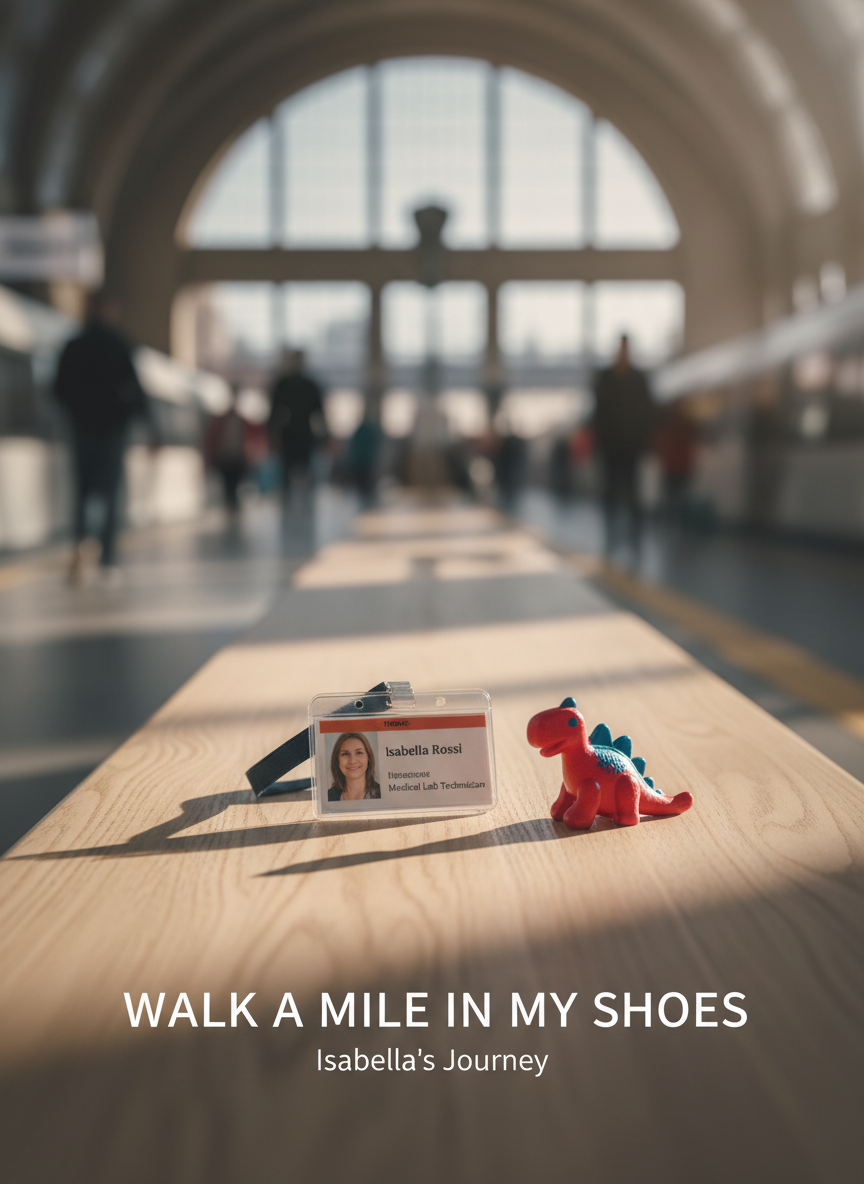 In our fourth journey, step into the shoes of a young professional whose dreams of stability are being held hostage…not by a lack of talent or ambition, but by a fifteen-minute gap in a bus schedule. For Isabella, the “last mile” isn’t just the distance; it’s a mathematical impossibility. Join us as we walk with Isabella through the “Canyon of Fifteen Minutes” and examine how integration and coordination between childcare and transit are missing links in the American workforce.
My name is Isabella. I am 27 years old, and if you saw me at the bus stop this morning, you might just see a woman with a heavy backpack and three energetic children in tow. But if you looked closer, you’d see the badge clipped to my scrub top: Medical Lab Technician. For the first time in my life, those words aren’t just a title; they are my ticket to a future I once thought was locked behind a door I couldn’t open.
For years, I worked what I call “just jobs.” I rang up groceries, I folded endless piles of clothes at the mall, and I waited tables until my feet throbbed. They paid the bills – barely – but they didn’t offer a path. As a single mother of three little ones under the age of seven, I knew I needed more. I needed a career that provided stability, benefits, and a sense of purpose.
I spent two grueling years studying at the local community college, with late nights fueled by cold coffee after the kids were finally asleep. When I finally walked across that stage with my certification in hand, I felt invincible. I was ready to contribute to our local hospital and finally give my children the life they deserved. But as I started applying for positions, a cold reality set in: the logistics of my life were a mathematical impossibility.
“I had the skills, I had the degree, and I had the job offers. What I didn’t have was a way to be in two places at once.”
In our fourth journey, step into the shoes of a young professional whose dreams of stability are being held hostage…not by a lack of talent or ambition, but by a fifteen-minute gap in a bus schedule. For Isabella, the “last mile” isn’t just the distance; it’s a mathematical impossibility. Join us as we walk with Isabella through the “Canyon of Fifteen Minutes” and examine how integration and coordination between childcare and transit are missing links in the American workforce.
My name is Isabella. I am 27 years old, and if you saw me at the bus stop this morning, you might just see a woman with a heavy backpack and three energetic children in tow. But if you looked closer, you’d see the badge clipped to my scrub top: Medical Lab Technician. For the first time in my life, those words aren’t just a title; they are my ticket to a future I once thought was locked behind a door I couldn’t open.
For years, I worked what I call “just jobs.” I rang up groceries, I folded endless piles of clothes at the mall, and I waited tables until my feet throbbed. They paid the bills – barely – but they didn’t offer a path. As a single mother of three little ones under the age of seven, I knew I needed more. I needed a career that provided stability, benefits, and a sense of purpose.
I spent two grueling years studying at the local community college, with late nights fueled by cold coffee after the kids were finally asleep. When I finally walked across that stage with my certification in hand, I felt invincible. I was ready to contribute to our local hospital and finally give my children the life they deserved. But as I started applying for positions, a cold reality set in: the logistics of my life were a mathematical impossibility.
“I had the skills, I had the degree, and I had the job offers. What I didn’t have was a way to be in two places at once.”
The Barrier: A Canyon of Fifteen Minutes
In our small city, if you don’t drive, you live and die by the transit schedule. My children’s daycare was on the far east side of town. The hospital, where the stable, high-paying jobs were, was on the west side. To get from my apartment to the daycare, and then from the daycare to the hospital using the county transit system, took nearly two hours. The math simply didn’t work. The first bus of the morning wouldn’t get me to the daycare early enough to then catch the transfer bus that reached the hospital by my 8:00 AM shift start. I was trapped in a fifteen-minute gap – a tiny sliver of time that felt like a canyon I couldn’t cross. I had to decline three job offers. Each “no” felt like a blow to my spirit. I began to wonder if my degree was just a expensive piece of paper.The Turning Point: Coordination in Action
Just as I was beginning to lose hope, I heard about a new initiative through our local Community Action Agency (CAA). They had received federal funding to coordinate services. The goal was something I had never heard of before: “coordinated human services.” The CAA, which also operates our county’s transit system, realized that transportation isn’t just about buses; it’s about the barriers that keep people from getting on those buses. Using the grant, they opened a fully licensed, high-quality childcare center directly inside the central transit hub. When I first walked into the center, I cried. It wasn’t just a daycare; it was a bridge. It was the missing piece of the puzzle that made my career possible.My New Reality
Today, my morning routine looks completely different. We leave the house and take one single bus to the central transit hub. I walk my children into a safe, bright, and loving environment right there at the station. I kiss them goodbye, walk fifty feet to the next platform, and board the direct express bus to the hospital. No more frantic transfers across town. No more apologizing to potential employers for a schedule I couldn’t control. Because the hospital is a primary stop on the hub route, I arrive at the lab five minutes early every day, focused and ready to work. At the end of my shift, the process reverses. I step off the bus, pick up my children, and we head home together. The transit system isn’t just a way to get around anymore; it’s the backbone of my family’s stability.Building a Brighter Future
This is what happens when a community stops looking at services in “silos.” When the people running the buses talk to the people providing childcare and the people training the workforce, lives change. I am no longer just surviving; I am thriving. My children see their mother in her lab coat, and they know that hard work pays off. But more importantly, they are growing up in a home where the stress of “how will we get there?” has been replaced by “where are we going next?” To the planners, the grant-writers, and the coordinators at the CAA and CCAM-TAC: you didn’t just build a daycare at a bus stop. You built a doorway to economic independence for families like mine. Thank you for walking a mile in my shoes and realizing that sometimes, all we need is a little coordination to reach our destination.Next in “Walk a Mile in My Shoes,” where we step out of our own lives to understand the complex journeys of our neighbors, we sit down with Roger, a man whose life story is a testament to both the heavy toll of service and the incredible resilience of the human spirit when backed by a supportive community.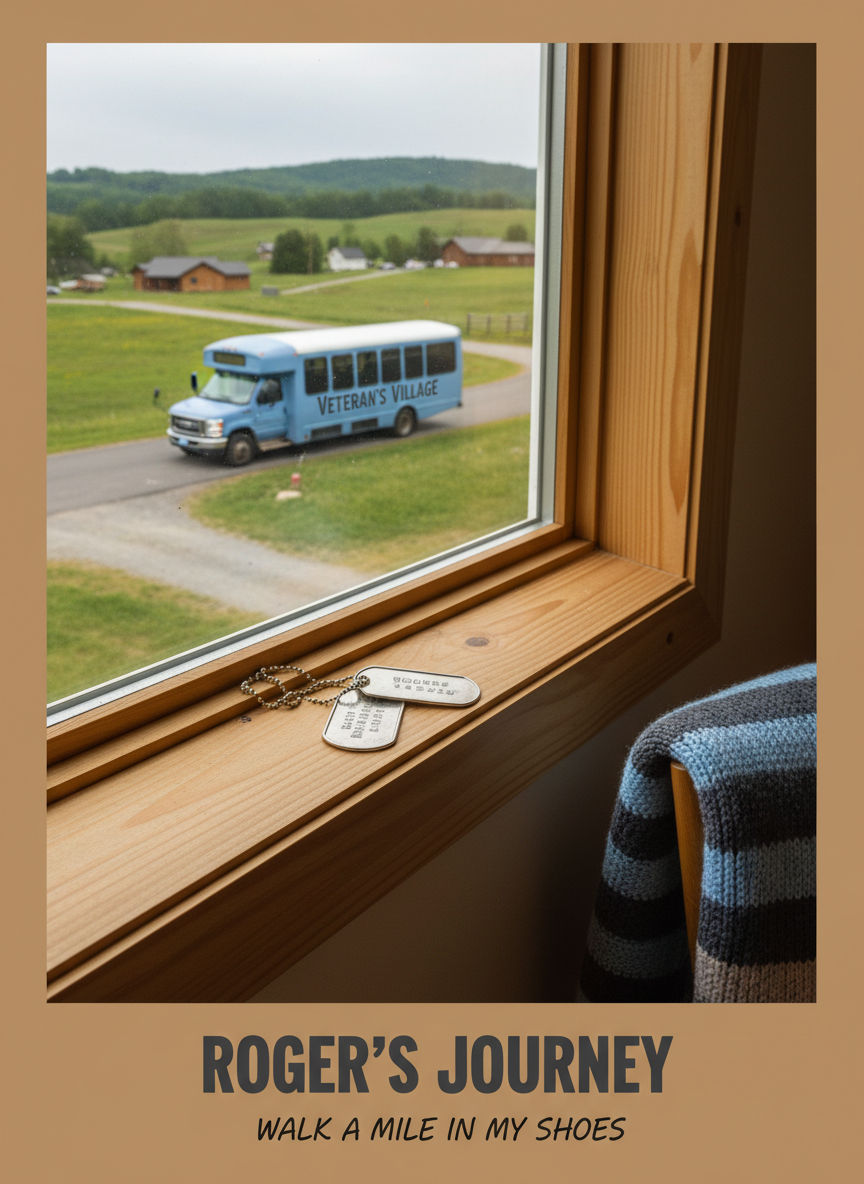
Roger is a veteran of Operation Desert Storm. Like many who served in the sands of the Middle East, he returned home carrying more than just his gear. He brought back the invisible, jagged shards of PTSD – memories that didn’t stay in the past, but instead leaked into his present, blurring the lines between the safety of home and the high-alert tension of the battlefield.
The Spiral into the Shadows
For years, Roger tried to “tough it out,” but PTSD is a relentless adversary. To quiet the noise in his head and the tremors in his hands, Roger turned to self medication. What began as a way to numb the pain quickly spiraled into a grueling battle with drug addiction. The consequences were swift and devastating: he lost his job, his stability, and eventually, his home.
Roger spent the better part of a decade drifting through the cracks of our society. He moved from shelter to shelter, and when the shelters were full, he lived on the streets. In the rural stretches of our region, being homeless often means being invisible. Perhaps the most tragic part of Roger’s story was his total disconnection from the Veterans Administration (VA). It wasn’t that he didn’t want help; it was that he couldn’t get to it. Without a car or reliable public transit, the 40-mile trip to the nearest VA clinic might as well have been across an ocean.
A Chance Encounter at the Soup Kitchen
The turning point in Roger’s life occurred in October 2025. He was sitting in a local soup kitchen, nursing a cup of coffee, when he met Joe, a representative from the local Disabled American Veterans (DAV) chapter. Joe didn’t just offer Roger a pamphlet; he offered him a seat in his car.
“I’d given up on the system because I couldn’t find my way into the building,” Roger told us. “Joe didn’t just tell me where the building was; he drove me there. He stayed with me while I filled out the paperwork. For the first time in years, I wasn’t just a number in a file; I was a soldier being brought back from the cold.”
Since that day, Joe and the DAV have become Roger’s lifeline. They provided the essential transportation that allowed Roger to re-engage with the VA. With a steady way to get to appointments, Roger has been able to attend consistent counseling sessions for his PTSD and participate in a structured recovery program for his addiction.
The Path Forward: Training and Recovery
As of April 8, 2026, Roger is six months sober and more focused than ever. Beyond healthcare, the DAV and the VA have coordinated to enroll him in a specialized work training program. He is learning skills that translate his military discipline into a new career, providing him with a sense of purpose that he thought was gone forever.
But the most exciting prospect lies just on the horizon. Roger is currently working toward a goal that once felt like a fever dream: a permanent home in the new rural “Veteran’s Village.”
The Veteran’s Village: A Model of Integrated Support
The “Veteran’s Village” is not just a housing project; it is a groundbreaking collaborative solution designed to address the unique needs of rural veterans. This initiative is a trifecta of coordinated support:
- The Veterans Administration (VA): Providing on-site and mobile clinical health services and peer support groups.
- Housing and Urban Development (HUD): Offering long-term, subsidized housing vouchers to ensure that veterans like Roger have a safe, dignified place to sleep.
- The Area Mobility Manager: This is the “secret sauce” of the project. The Mobility Manager coordinates a network of on-demand transit, volunteer drivers, and shuttle services to ensure residents are never isolated.
For Roger, the Village represents more than just four walls and a roof. It represents mobility. The integration of a Mobility Manager means that even in a rural setting, Roger will have guaranteed access to his medical appointments, his job, and his community. It removes the “transportation barrier” that kept him homeless for so long.
Roger’s journey reminds us that the road to recovery is rarely walked alone. It takes a community – a Joe from the DAV, a dedicated Mobility Manager, and a coordinated network of agencies – to pave the way home. When we invest in these systems of support, we aren’t just providing a service; we are honoring a promise made to those who served us all.
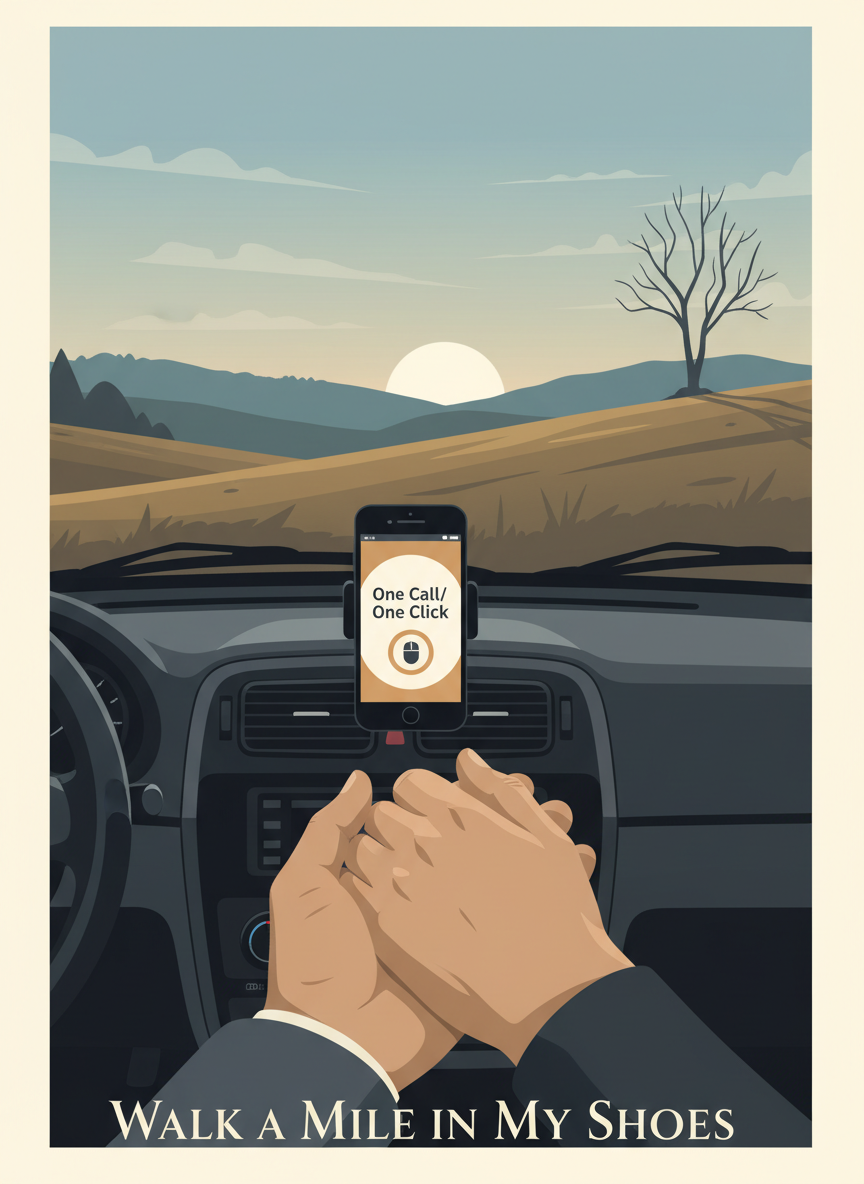 Welcome to the sixth and final installment of the CCAM-TAC’s “Walk a Mile in My Shoes.” To conclude our series, we explore the reality of the “Shared Ride Gap” and turn our focus to a story of resilience, sacrifice, and the heavy toll of rural caregiving.
Meet Martha and her daughter, Sarah.
The sun hasn’t yet crested the rolling hills of Clearfield County, Pennsylvania, when Sarah’s alarm clock buzzes at 5:00 AM. In the quiet of her rural home, the first sound she hears isn’t the birds, but the soft, rhythmic wheezing of the oxygen concentrator in the next room. For Sarah, a 52-year-old grocery store clerk, the day doesn’t begin with a cup of coffee; it begins with a checklist of medications, a blood pressure cuff, and the looming anxiety of the odometer.
Sarah is one of the millions of “invisible” laborers in America – a family caregiver. For the past year, her life has been defined by her 79-year-old mother, Martha, who is fighting the slow, grueling battle of recovery following a major stroke. In the sprawling landscape of rural Pennsylvania, care isn’t just a medical challenge; it’s a geographical one.
The Logistics of Love and Exhaustion
Martha’s recovery requires more than just local check-ups. Her specialists and intensive physical therapy sessions are located in DuBois and State College. For most, a 45-to-60-minute drive sounds like a manageable commute. For Sarah, it is a logistical nightmare. Every appointment requires Sarah to negotiate time off from her full-time job at the local grocery store – a job she cannot afford to lose, yet one that offers little flexibility for the unpredictable nature of post-stroke rehabilitation.
“It’s not just the hour drive there and the hour back,” Sarah explains, her voice weary. “It’s the hour of getting Mom into the car, the two hours in the waiting room, and the inevitable exhaustion that hits her afterward. I’m spending six hours of my day just to get her forty-five minutes of therapy. My boss is patient, but I can see that patience wearing thin.”
Then there is the financial toll. Sarah’s 2012 sedan was never meant for this kind of mileage. Every trip across the county line brings a new rattle in the engine and a deeper drain on her savings. Between the skyrocketing cost of gas and the constant wear-and-tear on her aging vehicle, Sarah finds herself choosing between a much-needed oil change and the specialized nutritional supplements her mother requires. The isolation of rural living, once a source of peace, has become a cage of distance and debt.
The “Shared Ride” Gap
Like many in her position, Sarah initially looked to the county’s existing “Shared Ride” program for help. However, she quickly discovered the limitations that many rural caregivers face. The program requires booking at least 24 hours in advance – a near impossibility when Martha has a sudden flare-up or a specialist’s office calls with a last-minute opening.
Furthermore, the shared-ride schedules are built around high-density routes. They rarely align with Sarah’s 7:00 AM work shifts or the specific mid-afternoon windows required for Martha’s therapy. “The bus can get her there,” Sarah notes, “but it might drop her off two hours early or pick her up three hours late. She’s 79 and recovering from a stroke; she can’t sit in a plastic chair in a lobby for half a day alone. So, I drive. I always end up driving.”
The emotional impact of this “stuckness” is profound. Sarah hasn’t seen her own doctor in eighteen months. She hasn’t had lunch with a friend or attended a community event since Martha came home from the hospital. Her world has shrunk to the interior of her car and the four walls of her home.
A Lifeline Appears: The Caregiver Support Transit Pilot
In early 2026, a glimmer of hope arrived in the form of the Caregiver Support Transit pilot program. This initiative, a collaborative effort between the Area Agency on Aging and the local transit authority (ATA) was designed specifically for people like Sarah. It recognized that transportation isn’t just about the patient; it’s about the ecosystem of care surrounding them.
At the heart of this solution are two revolutionary components: Mobility Management and the One Call/One Click system. Instead of Sarah spending her lunch breaks calling three different agencies to coordinate a single trip, she was introduced to a Mobility Manager – a dedicated professional whose sole job is to navigate the complex web of rural transportation.
The Solution in Action: Innovation through Coordination
The One Call/One Click system changed everything. This digital and telephonic gateway integrates multiple services into a single interface. When Sarah needs to get Martha to State College, she no longer has to worry if the county van is not available. The system automatically looks across a spectrum of providers:
- Volunteer Driver Programs: Vetted community members who use their own vehicles to provide door-through-door service for seniors.
- Integrated Shared-Ride: Real-time routing that connects rural outposts with existing transit hubs.
- Respite Transportation: A unique feature of the pilot that provides Sarah with transportation for herself, allowing her to run errands or attend her own medical appointments while a trained volunteer assists Martha.
The Mobility Manager acted as Sarah’s advocate, building a customized transportation plan that synced with her work schedule. If a volunteer driver could take Martha to her 2:00 PM appointment, Sarah could stay at the grocery store for her full shift, knowing her mother was in safe, trained hands. These drivers aren’t just chauffeurs; they are trained in basic emergency protocols, providing a level of safety that a standard ride-share service simply cannot offer.
The Relief of a Coordinated Future
Today, Sarah’s life looks different. The “Caregiver Support Transit” program has effectively returned ten hours a week to her – hours she previously spent behind the wheel in a state of high-alert stress. With the burden of the long drives eased, her car is lasting longer, and her savings are slowly beginning to stabilize. More importantly, the emotional fog of isolation is lifting.
“Last Tuesday, for the first time in a year, I went to the library while Mom was at therapy,” Sarah says with a small smile. “It sounds like such a small thing, but for a caregiver, that hour of ‘me-time’ is everything. I felt like a person again, not just an ambulance driver.”
Sarah’s story highlights a critical truth for rural America: Mobility is a social determinant of health. By investing in Mobility Management and streamlined systems like One Call/One Click, we aren’t just moving vehicles; we are supporting the invisible army of caregivers who hold our families together. As we look toward the future of rural transit, Sarah’s relief serves as a powerful testament to what happens when community coordination meets human need.
Walk a Mile in My Shoes is dedicated to sharing the lived experiences of those navigating transportation barriers in America.